As part of CS 511: Database Systems at the University of Illinois Urbana-Champaign, our team —Runzhi Ma, Dev Patel, Alex Zheng, Ben Clarage and Abdulrahman AlRabah — conducted an in-depth study comparing the performance and design trade-offs between SQL, NoSQL, and a hybrid database architecture using the Amazon Reviews dataset. The goal was to understand how different database systems handle large-scale, real-time data under varying workloads.
We evaluated MySQL (representing relational systems) and MongoDB (representing NoSQL) through experiments deployed on Google Cloud Platform and MongoDB Atlas. To address the limitations of both systems, we also designed a hybrid model that integrates a buffered streaming layer for optimized inserts and queries. This approach improved isolation and reduced I/O contention, achieving SQL-like consistency while maintaining the scalability advantages of NoSQL.
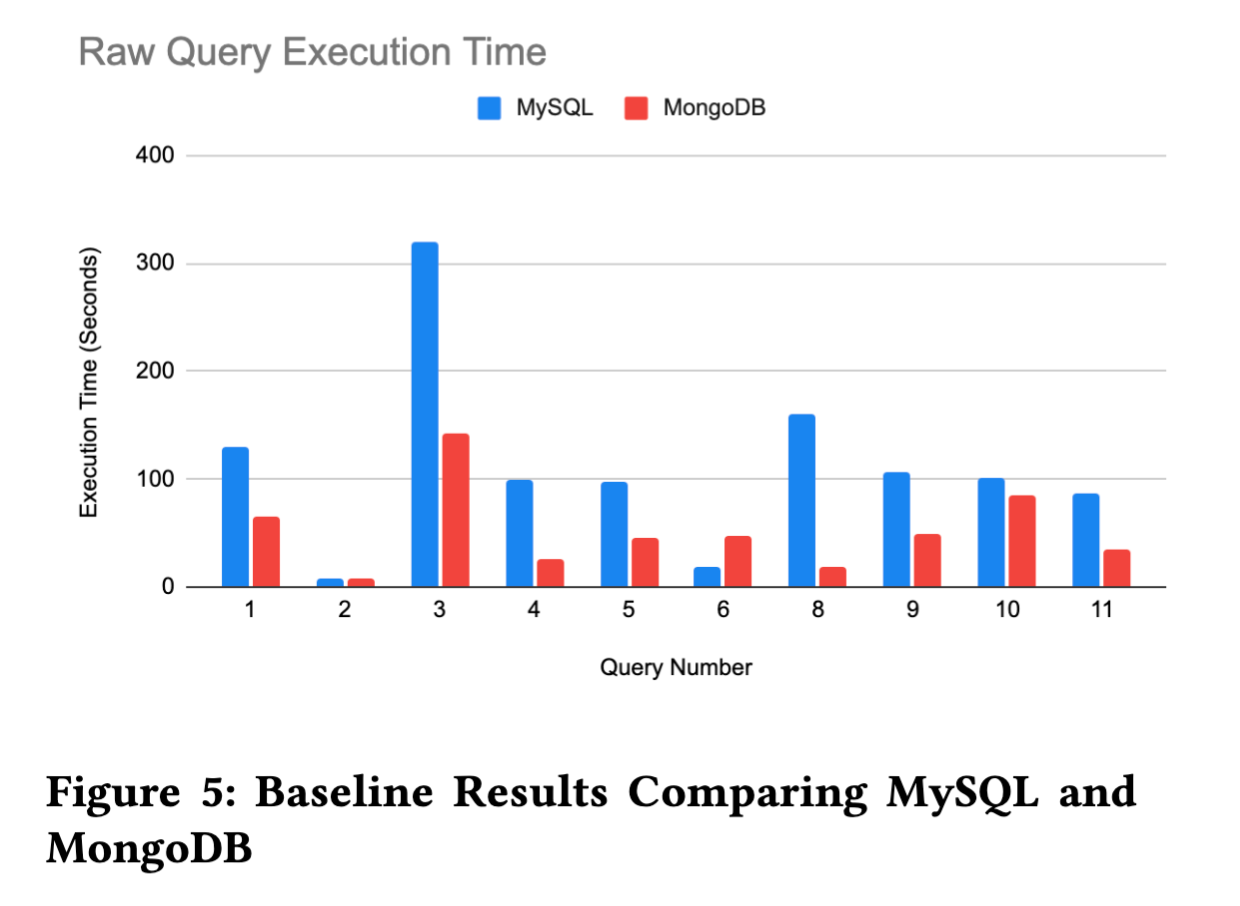
The results showed that MySQL performed better on complex transactional queries, while MongoDB excelled in high-volume write operations. The hybrid system achieved a strong middle ground, balancing data integrity and scalability with lower latency in mixed read-write scenarios. This project offered practical insights into modern database architecture design and performance tuning for real-world data-driven applications.